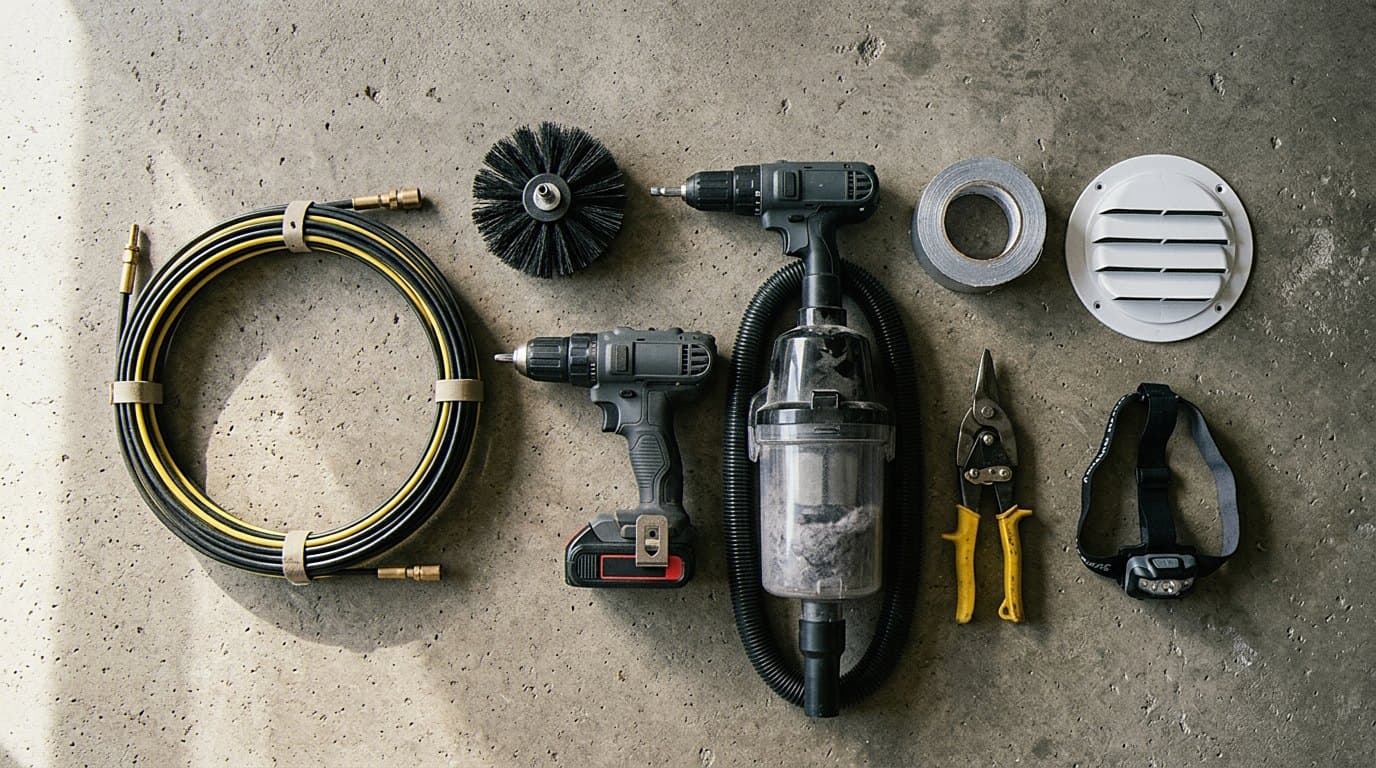
New vent runs, and old ones put on a better path
Some vents were never built right. The laundry landed in a corner where nobody wanted to cut a hole, so the pipe went the long way around, up over the joists, across the house, and out a wall on the far side. Every extra foot and every turn asks more of the machine. We install new runs, and we reroute the ones that fight the dryer all day. That means picking the shortest honest path to open air, cutting the opening, setting metal pipe with clean joints, and finishing the outside so weather stays where it belongs. If you are adding a laundry room, moving the machines upstairs, or finishing part of a basement, the vent is the piece most people plan last. We would rather plan it first, with you, while the choices are still cheap.
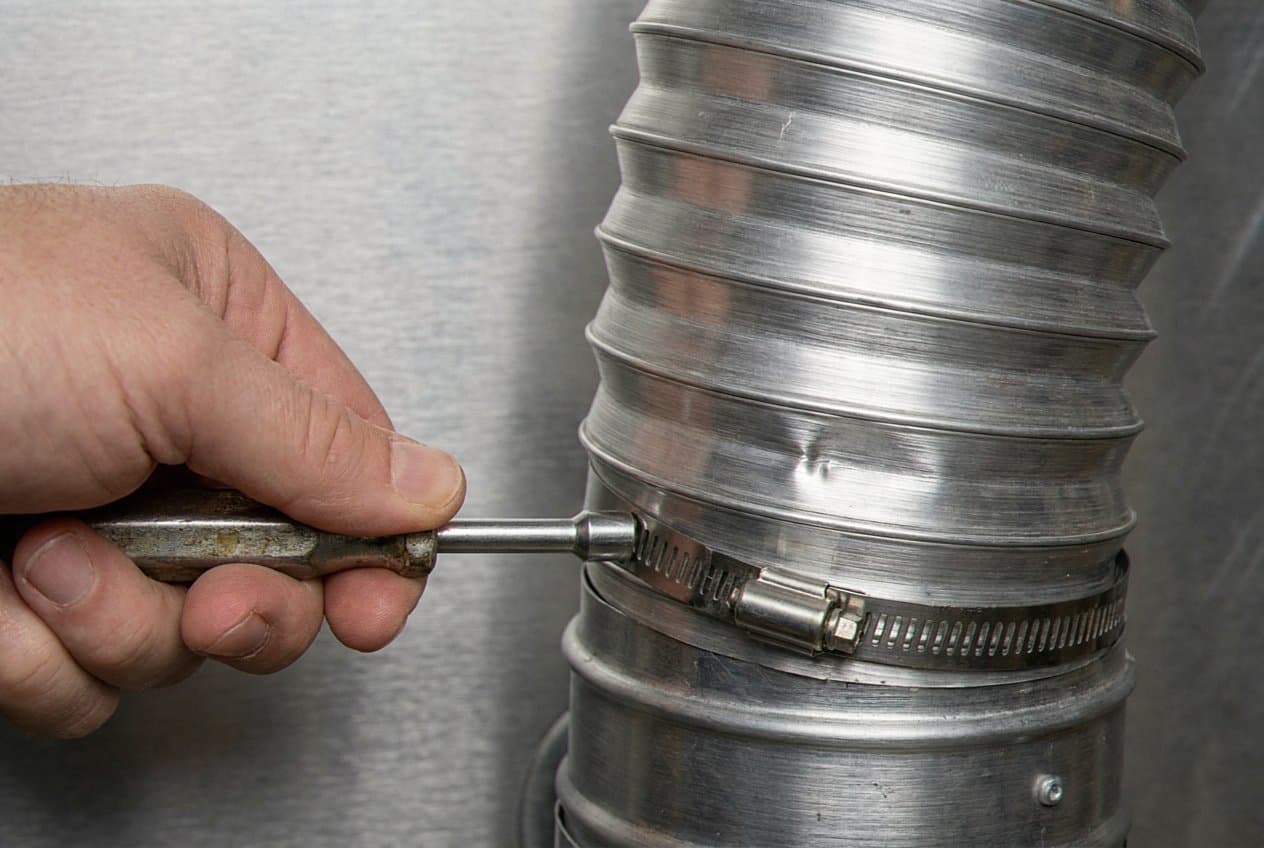
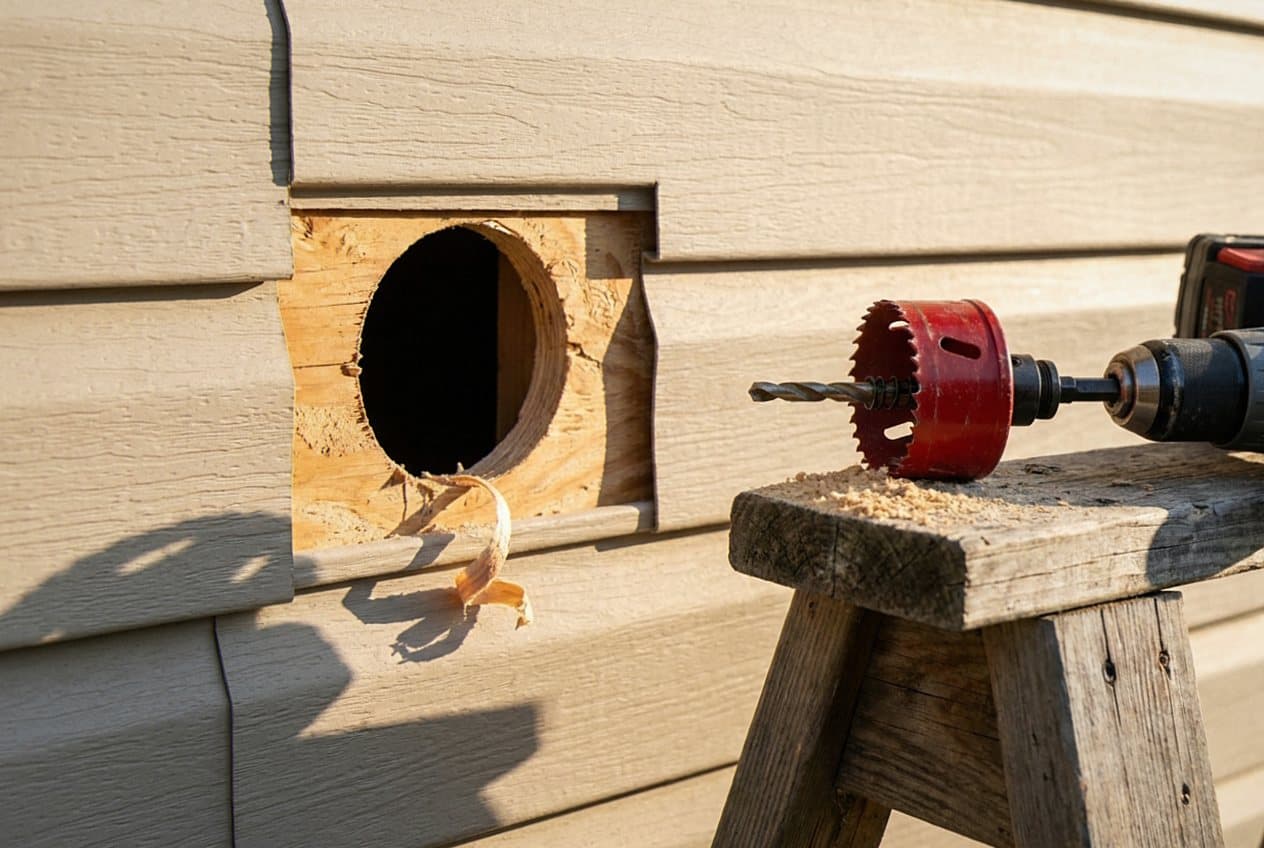
The work starts with a walk through the house. We look at where the dryer will sit, which way the joists run, what is hiding inside the wall we want to pass through, and how far it is to open air. Then we lay out two or three possible paths and talk through the trade offs. A short run through a rim joist beats a long climb to the roof almost every time. Once the path is settled, we cut the opening, frame it clean, and run smooth metal pipe with as few turns as the house will allow. Joints get foil tape, never screws. Outside, we set a cap that seals to the siding and swings free. Before we pack up, we run the dryer, read the air at the machine and again at the cap, and show you what a healthy run feels like.
- We map the shortest honest path first, so your dryer is not pushing air across the whole house.
- New runs go in as smooth metal pipe with sealed joints, which lint travels through instead of sticking to.
- We cut and finish the wall opening ourselves, so you are not chasing another trade to patch the siding.
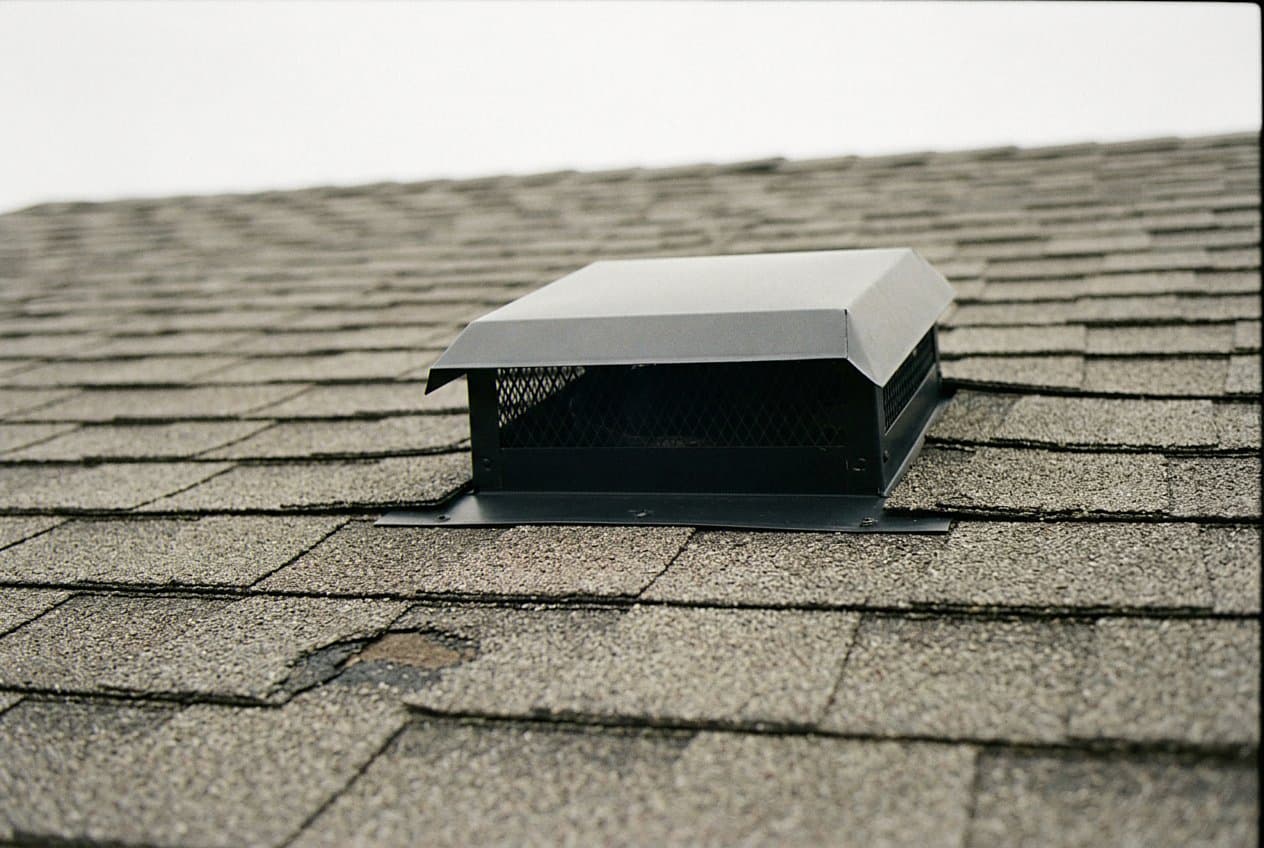
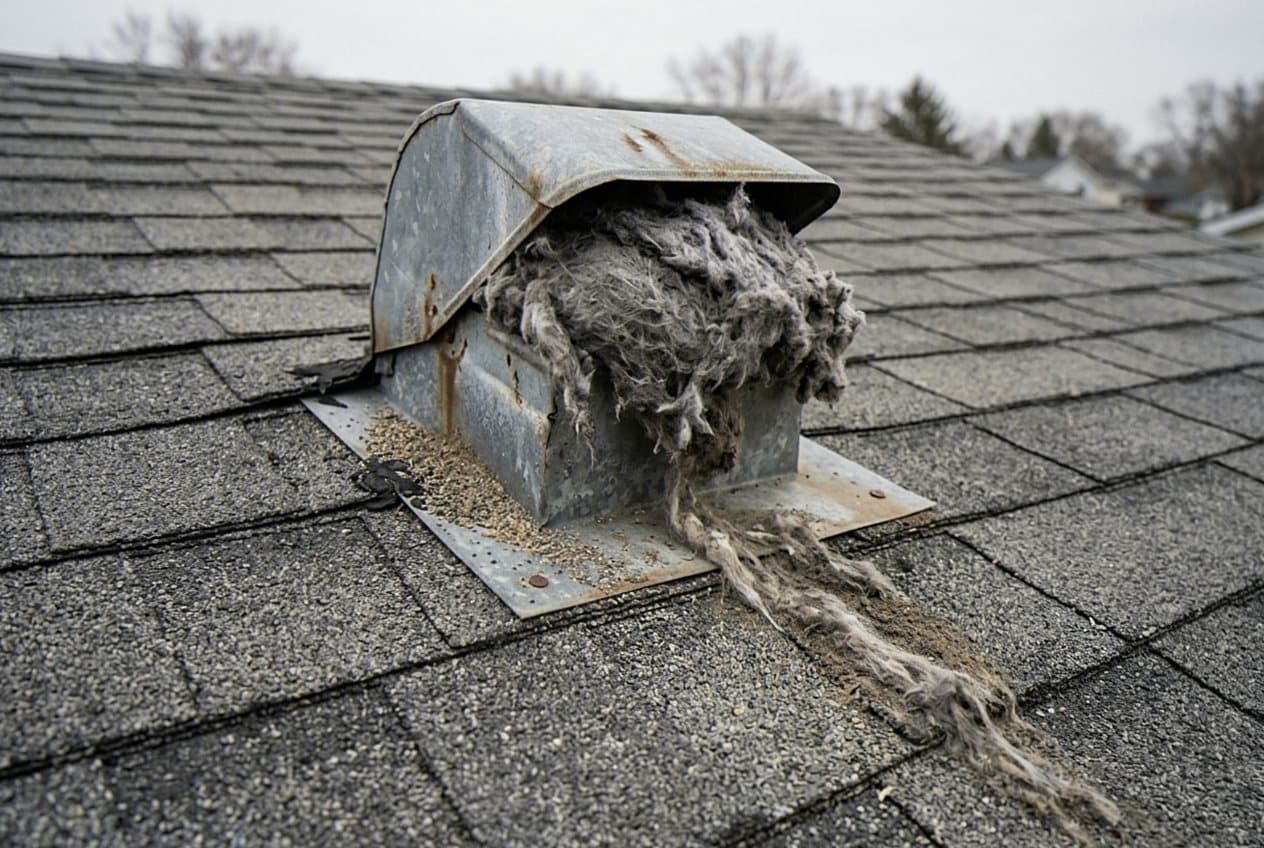
- A reroute can move a run off a long roof path and out a side wall, where snow and ice stay off the flap.
- We test the finished run with the dryer going, and we hand you the readings rather than simply saying it works.
Elgin housing stock makes this interesting. The older homes near the downtown historic district have deep basements and laundry tucked under the stairs. The straight path out is often through a rim joist that already carries a gas line. The newer streets west of Randall Road tend to put laundry upstairs by the bedrooms. That is handy for the family and hard on the pipe. The run has to climb into an attic and cross the whole house to a roof cap. We work on both kinds of home. On upstairs laundry we push for a side wall exit whenever the framing allows it, because a roof cap sitting under snow all winter is the first thing to freeze shut.
If your laundry is moving, or the run you have takes the long way around, call us before the drywall goes up. We will come look, walk the options with you, and lay out what each path takes. Our crew installs and reroutes vents across Elgin and the towns around it, from Gilberts and Sleepy Hollow to West Dundee, Hoffman Estates, and South Elgin. Tell us where the dryer is going and we will tell you how to get the air out.