
We look at the whole run before we touch anything
We are the crew that shows up, cleans the duct, and tells you straight what we found. Based in Elgin, working across Kane County and the towns just past the line.
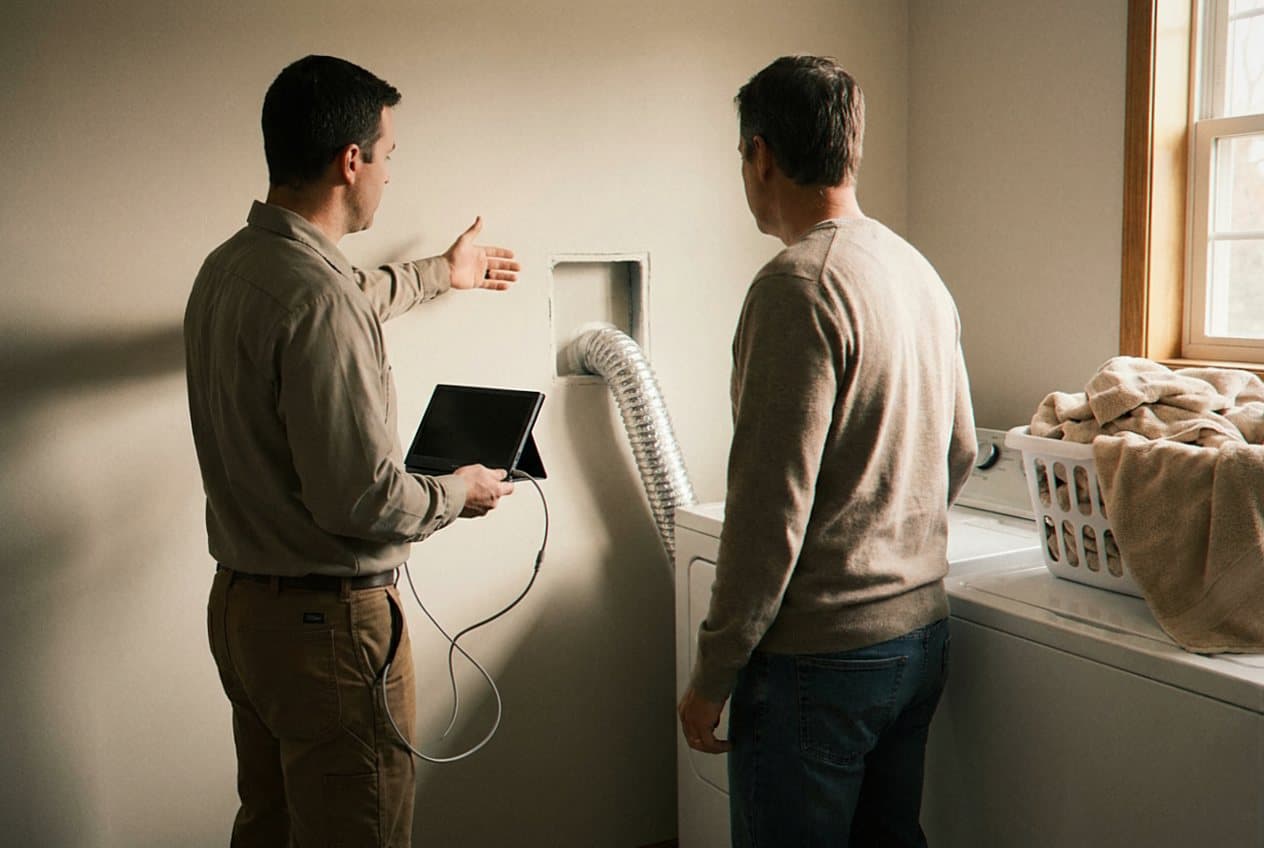
We look at the whole run before we touch anything
We are a small outfit built around one trade. Dryer vents are what we do all day, so we know what a bad one looks like from the driveway. That focus is the whole point. A general handyman touches a dryer duct twice a year and works from memory. We touch dozens a week, in basements downtown, in second floor laundry closets out by Randall Road, and on the roofs of buildings that run laundry for forty units. Patterns show up when you see that much of one thing. We can usually guess what is wrong before the dryer moves an inch.
Our approach starts with looking rather than selling. When we get to your house, the first thing we do is walk the run. Where does the dryer sit, where does the pipe go, and where does it come out. Sometimes the answer is easy and the hood is right there on the wall behind the machine. Sometimes we are in the yard hunting for a vent that turns out to be up under a soffit, or on the roof, or hidden behind a deck somebody built over it. That walk tells us how long the job takes and what tools come off the truck. It also catches the surprises before they become an argument halfway through.
Then we do the work in an order that keeps your house clean. Drop cloth first. Dryer out slowly, gas line checked if it is a gas machine, hose off, vacuum sealed to the open duct. The brush goes in and turns slow, because a brush spun too fast polishes lint instead of lifting it. We work the full length, then go outside and finish the last stretch from the hood side, where the heaviest packing always sits. Everything we pull comes into a bag. We put the dryer back where it was, level it, run a cycle, and check the air at the hood with you standing there.
We are also careful about what we do not touch. If your dryer has a mechanical fault, that is an appliance repair, and we will tell you so instead of taking a swing at it. If a duct runs through a wall that has to be opened, we say that out loud before anything gets cut. If a landlord or a board has to sign off on work in a shared building, we wait for that. Nobody enjoys the phone call that starts with a surprise. We would rather come back a second time than leave you with a mess and a bill you did not expect.
Being from here matters more than it sounds. We know that houses on the older streets near the river have stone foundations and short duct runs with too many bends. We know the blocks built in the last twenty years put laundry upstairs and run the pipe halfway across the attic. We know that a January wind off the open ground west of town freezes a hood shut faster than the same weather three miles east. That knowledge is not marketing. It saves you time on the phone, because we can ask two questions and picture the setup.
Plain work and plain answers
People stay with us for plain reasons. We answer the phone, we show up in the window we gave you, and we do not talk in riddles. When we find something bad, we take a picture and show you. When we find nothing wrong, we say that too, and we do not invent a problem to fill the visit. That last part loses us work now and then. It also means the folks who call us in Elgin, South Elgin, Bartlett, and Streamwood tend to call us again, and they hand our number to a neighbor without being asked.
We keep records so you are not starting over every time. What the airflow read before and after, what shape the hood was in, whether the hose behind the dryer is metal or foil, how long the run is, and what we would watch next visit. Property managers get the same notes for every unit. It turns a service call into a history, and history is what tells you whether a building needs attention twice a year or once every two years.
Our schedule is built for real life. Plenty of our work happens in the morning before the day gets going, or in the late afternoon when someone is home from work. Buildings usually want us in the quiet hours. If you need to leave a key or work through a manager, we can do that as long as the arrangement is clear ahead of time. We are not going to make you take a day off and wait around, because we have all been on that end of it and it is a bad way to spend a Tuesday.
The last thing worth saying is about honesty around timing. A duct that has never been cleaned in fifteen years is going to take longer than one we saw last spring. A nest in the last elbow adds time. A run that hides behind finished basement ceiling adds more. We would rather quote you a range on the phone and hit the low end than promise a quick stop and then rush the job. Good work on a dryer vent is not complicated. It just has to be done all the way to the end of the pipe, every single time.