What we check on a dryer vent inspection
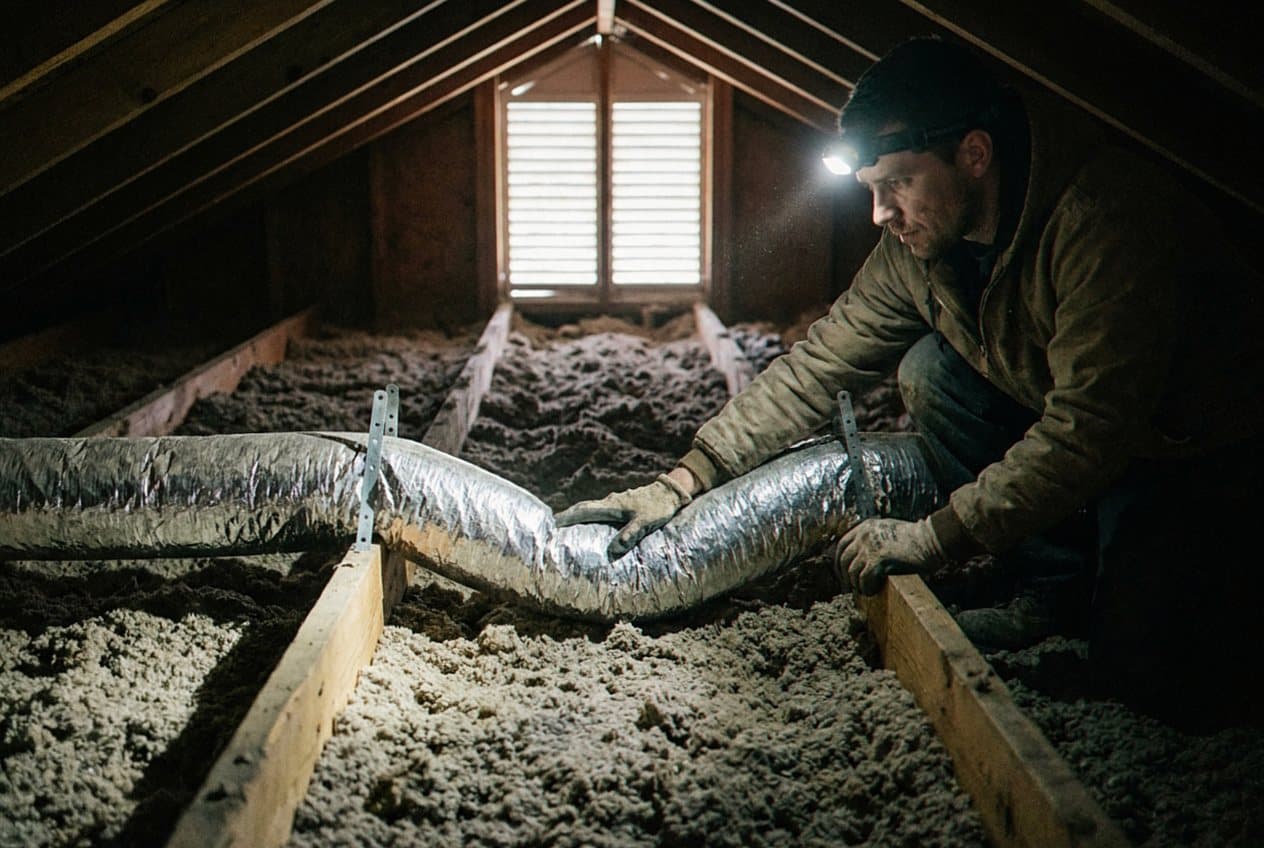
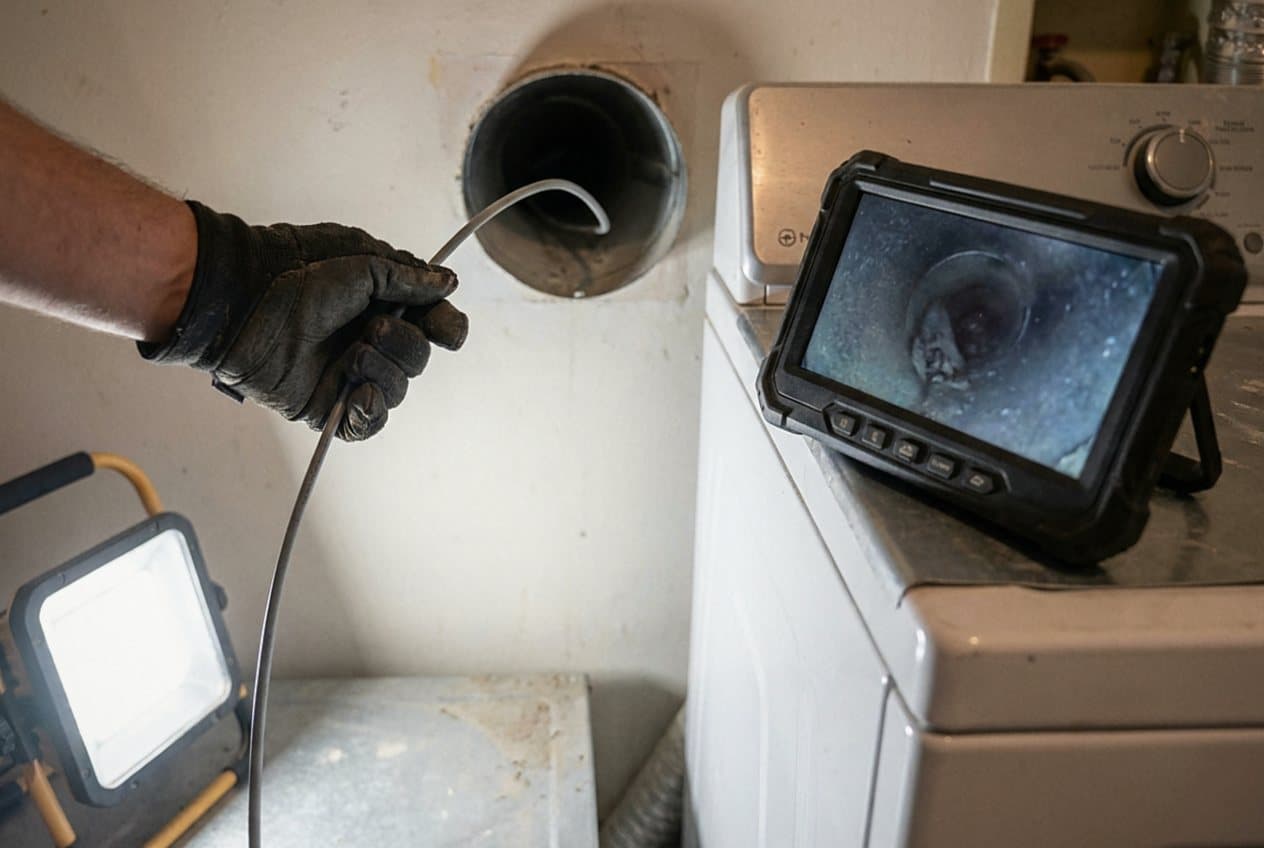
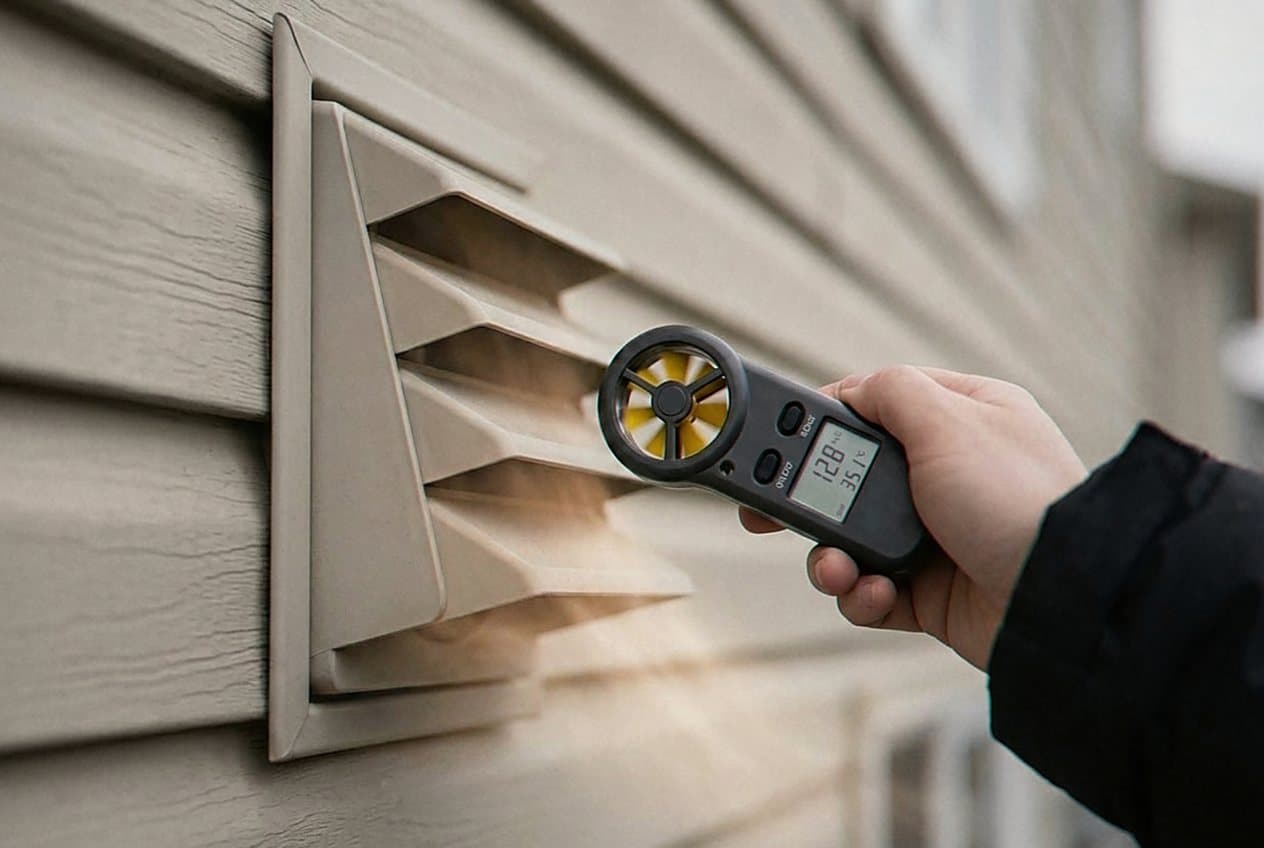
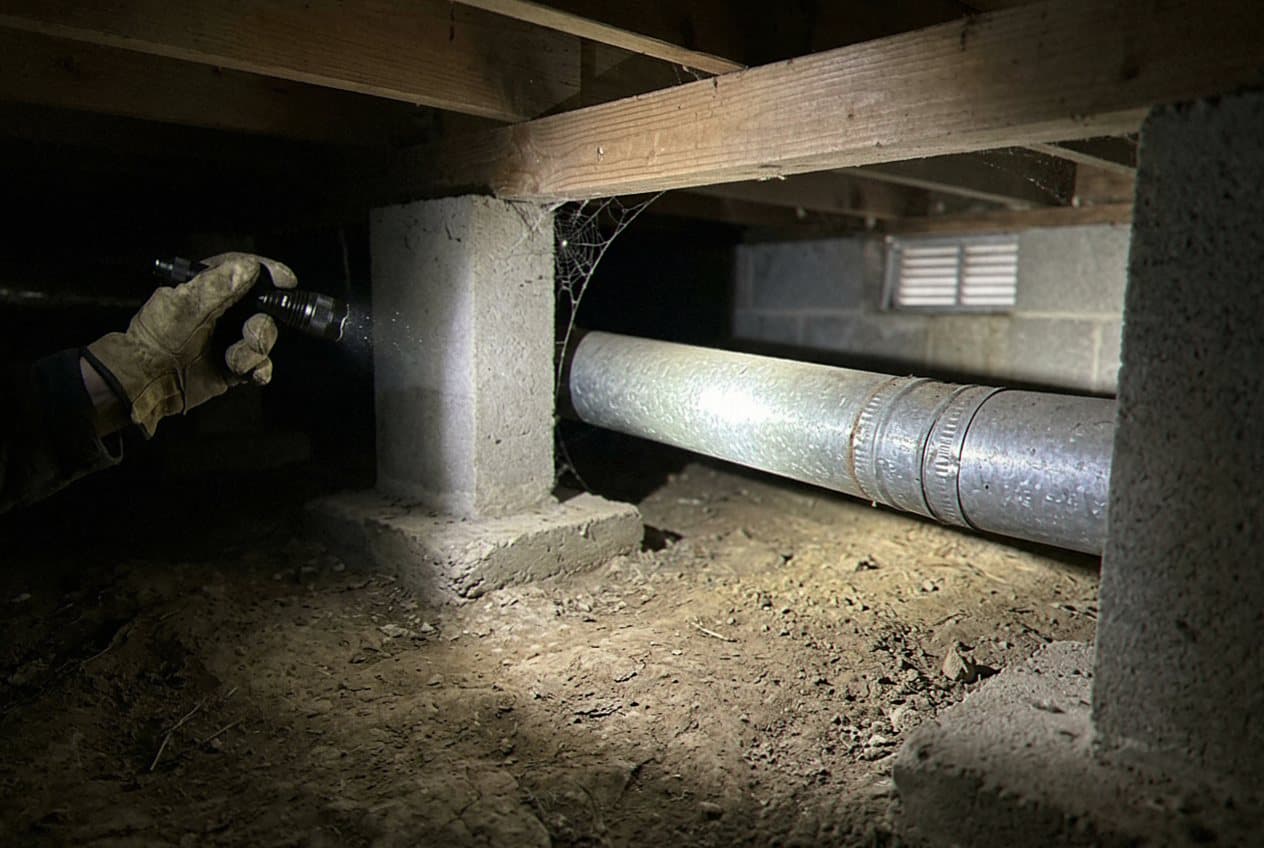
People call us for an inspection for one of a few reasons. A house is changing hands and the buyer wants the vent looked at before closing. A landlord is turning a unit over and wants a record of what sits inside the wall. Or the dryer takes two cycles to finish a load, and you would rather know the cause than pay for a cleaning that may not even be the fix. Whatever brought you here, we start the same way every time. We look at the machine first, then the pipe behind it, then we follow the run all the way to the point where it leaves the house. We read the air coming out of the hood with a meter, so slow stops being a feeling and becomes a number you can write down. Then we send a camera down the line and watch the inside of the duct on a screen with you. Lint depth, sagging pipe, crushed elbows, screws poking through the wall of the duct, joints that have pulled apart inside a stud bay, all of it shows up on video. We note what the duct is made of as we go, because foil and plastic behave nothing like smooth metal. We count the turns and we pace the length, since both of them add drag the dryer has to fight. Outside, we look at the hood, the flap, and whether a bird has moved in behind it. If the dryer burns gas, we watch how the burner behaves while the machine runs. We also look for the things nobody sees from the laundry room. Some runs end inside an attic or a soffit rather than open air, which pushes warm wet lint straight into the framing. Some have a booster fan buried in a ceiling that quit spinning years ago and nobody noticed. Stains on drywall, rust on screw heads, and a soft spot in a joist all tell us the duct has been leaking damp air where it should not. We photograph every fault and mark where it sits in the run. Nothing gets torn out during an inspection. The point is to know what is there before anyone touches it.
Elgin does not have one kind of house, so we do not run one kind of inspection. Near the historic districts you find tall old homes with the laundry down in the basement. The run climbs, turns two or three times, and ends at a hood tucked under a porch roof where nobody has looked in years. Plenty of those ducts went in during a remodel decades ago and are still foil, stapled up to the joists. Foil is the worst of them. On the other side of town there are rows of post-war ranches with a short run going straight out through the rim joist. Those are the easy ones. The hood sits low to the ground, though, so mulch, snow, and shrubs end up choking it by the end of winter. Out in the newer subdivisions the laundry has moved upstairs next to the bedrooms, which means a tall run hidden inside a wall and a roof cap you cannot even see from the driveway. Townhouse and condo rows are a case of their own, because several units may share one soffit and those flat runs get very long. Winter in Kane County piles on more trouble. Warm wet air moving through a cold duct in an attic gives up its water, and the damp lint left behind turns to a paste that a brush drags across instead of pulling out. Flaps freeze shut after an ice storm and stay that way for weeks. Then spring comes. Sparrows and starlings go hunting for a hole in a wall, and a vent hood with a broken flap is the exact hole they want. If you have lived here through a few February stretches, none of this will surprise you. The dryer that ran fine in October starts to struggle in January, and the reason is almost always outside the house rather than inside it. We keep every bit of that in mind while we work, and we tell you which of those problems you are actually looking at.
- A camera goes down the whole run. You watch the inside of your own duct on a screen, so nothing rides on our word for it. Lint depth, crushed elbows, and joints that pulled apart inside a wall all show up on video. We mark how far each one sits from the dryer, so the next person who opens that wall knows right where to start.
- We read the air at the hood with a meter. A slow dryer stops being a hunch and turns into a number. That number gives you something to check against later, after a cleaning or a fix. It also helps at the next turnover, when a new tenant asks why one load of laundry takes all evening.
- You get our findings in writing, with photos. Send them to a buyer, a seller, a landlord, or the board that runs your building. Nothing in the report is there to talk anyone into work. Each item says where in the run we found it, and what we saw when we got there.
- The risky stuff goes at the top of the page. A run that ends in the attic. Plastic pipe behind the machine, screws in the airway, a nest packed into the hood, or a gas dryer that is not venting right. Those come first, well ahead of the small notes.
- If the line is clean, we say the line is clean and we go. We would rather you keep your money and call us again in a year or two than sit through a pitch you did not ask for. A visit that ends in good news is still worth the hour. Now you know.
What you get at the end is a plain written report rather than a pitch. We list what we found in the order it matters. Photos and video stills go with each item. Each one is tagged by where it sits along the run, so you can find it again without us. You get the air reading, the length we measured, the number of turns, and what the duct is made of at each stretch. Then we split the list in two. Items that need work now sit at the top, and items you can watch for a season or two sit below them. A nest in the hood belongs at the top. A run with one extra elbow is a note for later. If the line is clean and the air moves the way it should, we write that down too and we leave it alone. We do not invent a cleaning to pay for the trip. We also walk you through all of it before we pull out of the driveway. Most people want to know two things, and both are fair. Is this a fire risk, and is it why the dryer is slow. We answer both in plain words while we are standing there, and you still have the paper to read again later once the day slows down. The report is yours to use however you like. Buyers hand it to sellers. Sellers file it with the rest of the disclosure paperwork, so a late question does not blow up two days before closing. Landlords keep one sheet per unit and pass it along to whoever runs the building. Board members bring it to a meeting when a whole row of units shares one soffit. If you own several buildings, we can book a batch in one morning and send it all in one email that afternoon. If you want us to handle the repair or the cleaning after that, we will, and we quote that work on its own. If you would rather hand our findings to somebody else, that is fine as well. The inspection stands by itself either way. The numbers in it do not change based on who ends up doing the work. That is the whole point of paying for a look before paying for a repair, and it is why we write the report the way we do, item by item, with the reason for each one spelled out right next to the photo. It is your call after that.
Call us and tell us what is going on. Where the dryer sits, whether it burns gas or runs on electric, and roughly where the vent comes out of the house. That is usually enough for us to say what we expect to find and how long the visit should take. We work across Elgin and the towns around it, from South Elgin and Bartlett to Streamwood, Carpentersville, West Dundee, and St. Charles. If you are on a closing clock, say so when you call and we will work around the date. Most inspections take under an hour, and the written findings go out the same day we visit. You will hear a real person on the phone, and the one who answers is the one who sends the truck.