Your dryer stops needing three cycles to dry one load
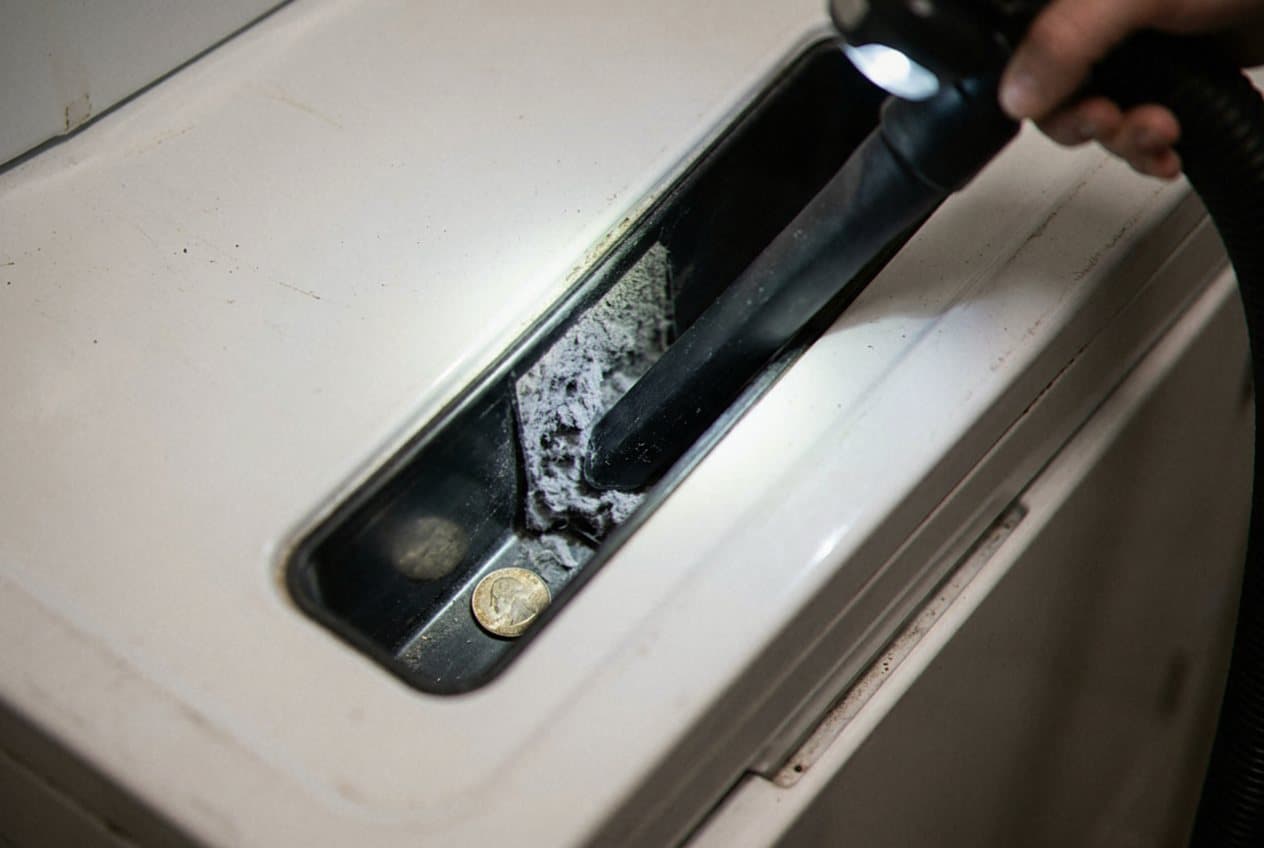
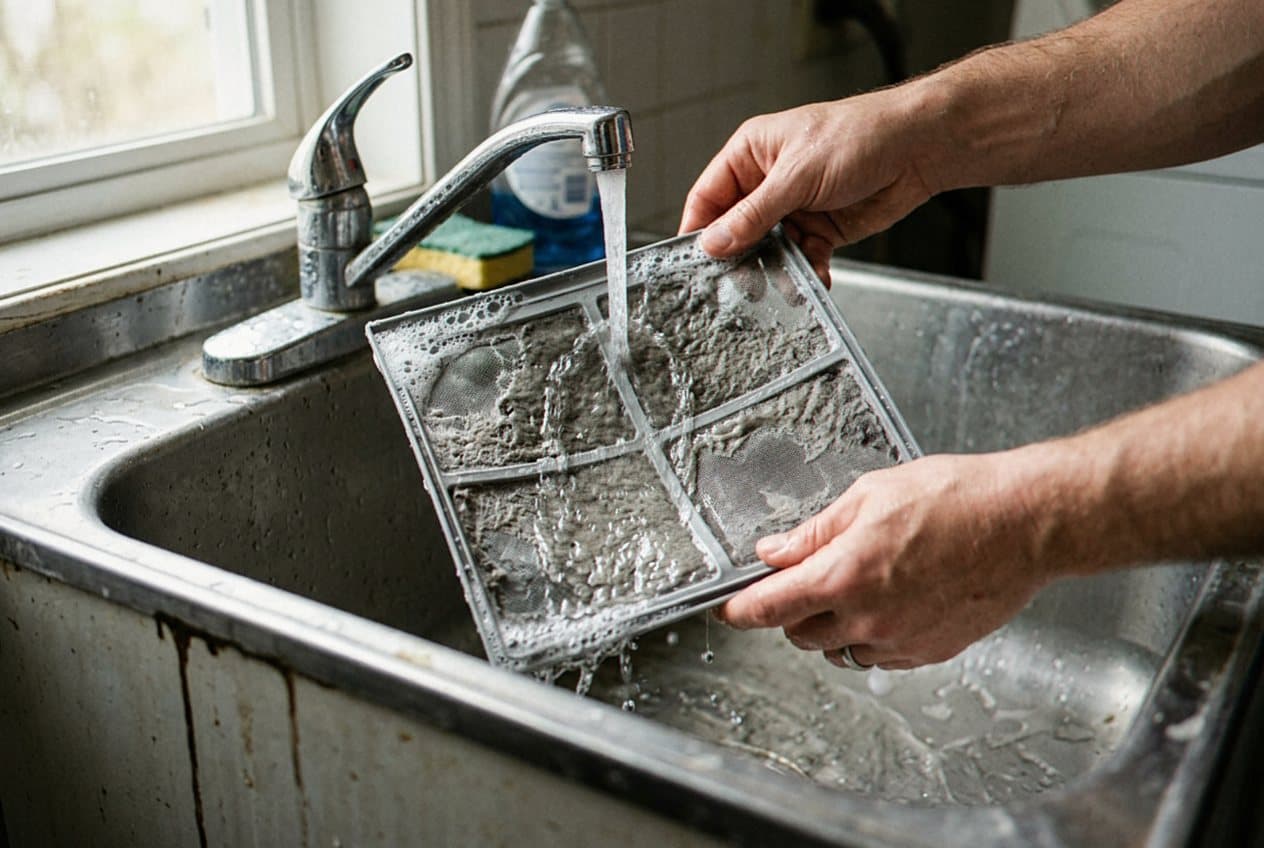
A dryer vent clogs slowly, so most people miss it. The first sign is time. A load that used to dry in forty minutes now takes two turns of the dial, and the clothes still come out warm and damp. Then the laundry room starts to feel like a sauna. You may notice a hot metal smell, or a film of fine gray dust on the floor behind the machine. Lint is the cause. Every load sheds fiber, and the lint screen catches only part of it. The rest rides the warm air into the duct, sticks to the walls, and packs down at every bend. In Elgin homes that duct often travels a long way before it reaches daylight. Older houses near the historic district east of the Fox River tend to have basement laundry and a long overhead run out to the rim joist. Newer subdivisions out toward Randall Road and the Bartlett line often put the washer and dryer on the second floor, so the air has to climb and turn several times before it leaves the roof or the side wall. Long runs and tight elbows are where lint settles first. Winter makes all of it worse. Cold air on the far side of the wall chills the moist exhaust, the moisture turns to water, and the damp lint packs into a mat that air cannot push through. Snow and ice at the outside hood can hold the little flap shut. Pressure backs up into the duct, and your dryer sits there running hot with nowhere to send the heat. That is the point where a chore turns into a hazard. Fire agencies put failure to clean at the top of the list of causes for clothes dryer fires. The heat also cooks the machine itself. A blocked vent trips the thermal cutoff, and that is a repair on an appliance that worked fine last season. If you are not sure how bad the buildup has gotten, a dryer vent inspection tells you before you spend a dime on parts. A few other tells are worth knowing. Fabric softener sheets leave a waxy film on the lint screen, and that film cuts airflow before the duct is even part of the story. Run tap water over the screen. If the water pools instead of passing straight through, wash the screen with soap and a brush. Damp drywall or a musty smell near the laundry wall usually means the exhaust is leaking inside the house instead of going out of it.
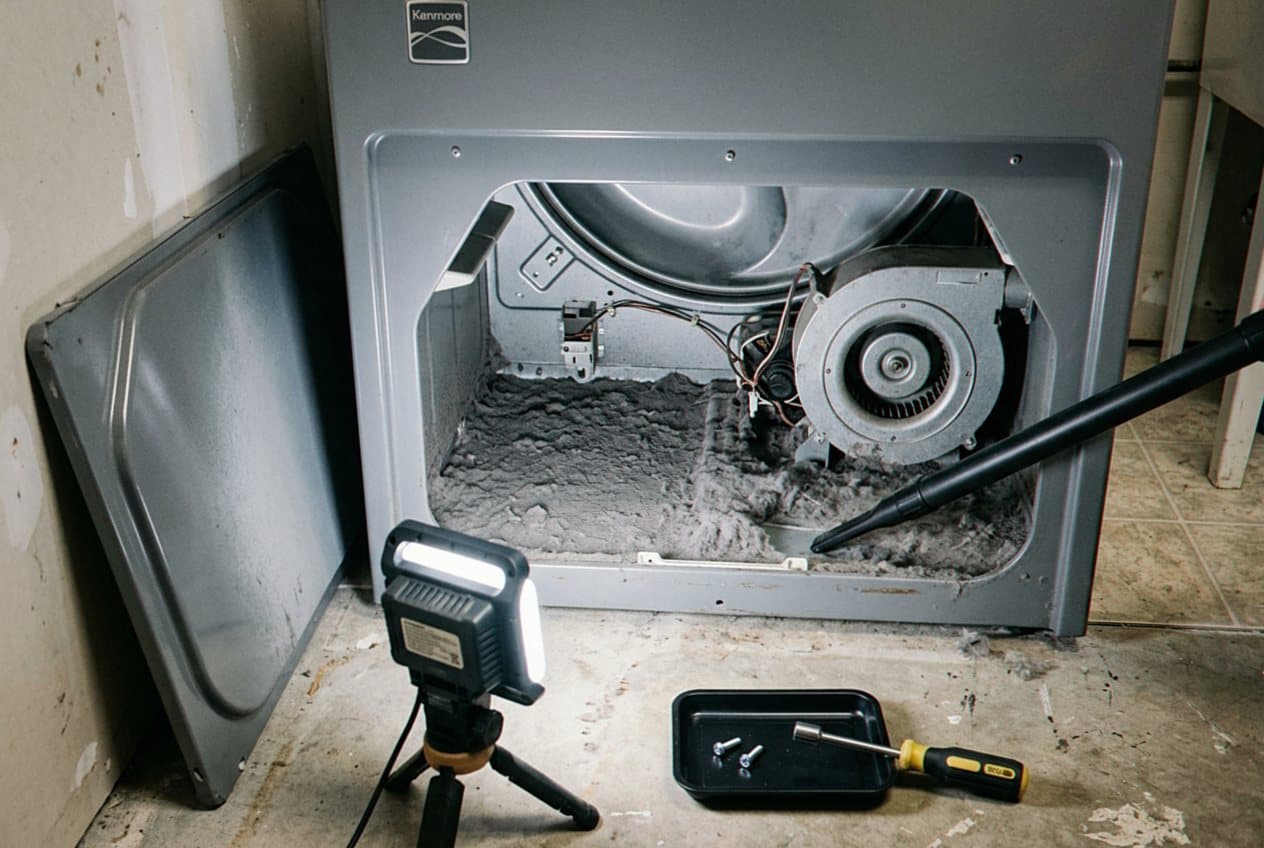
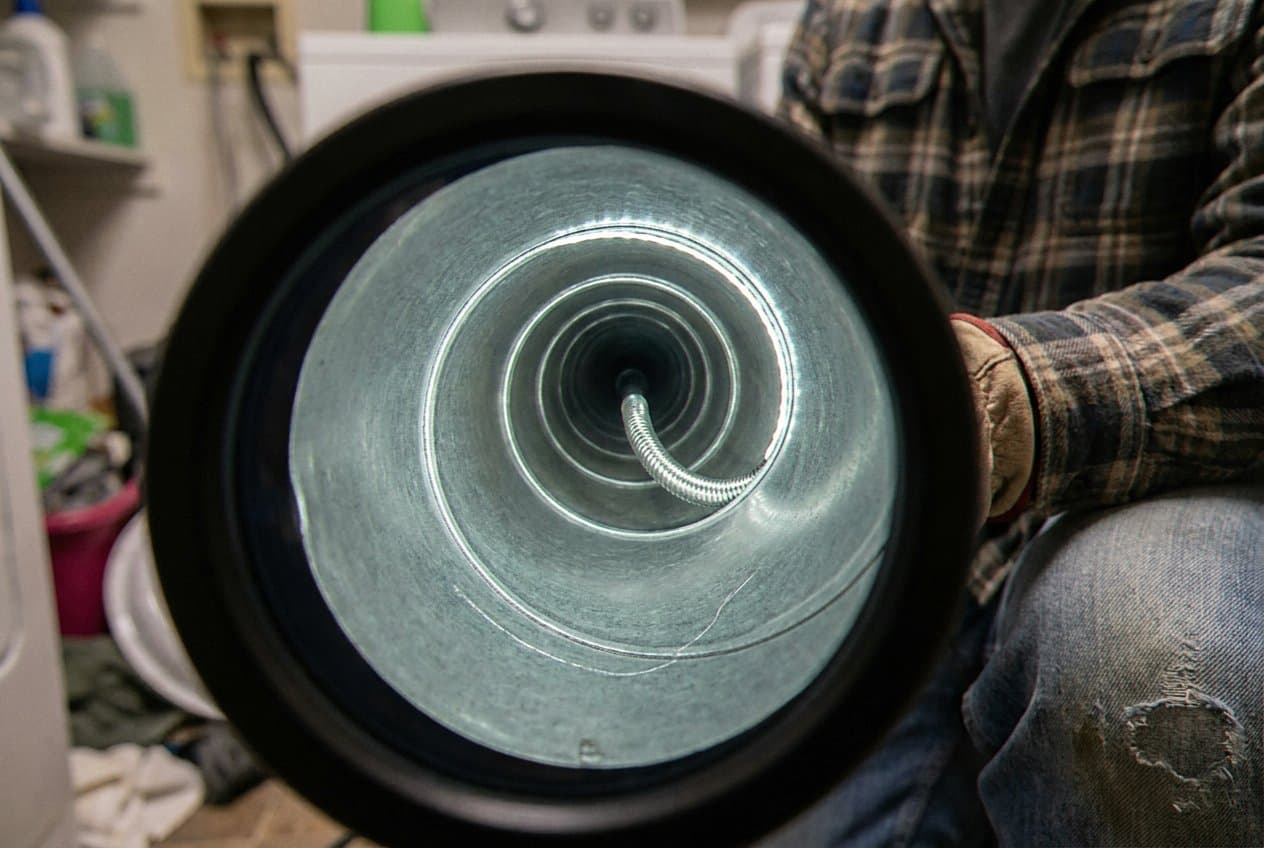
We treat the duct as one system, from the back of the machine to the flap on the outside wall. The visit starts with the dryer pulled forward and unplugged so we can see the connection nobody ever looks at. Very often the trouble is right there. A flexible foil hose gets crushed flat when the dryer is pushed back against the wall, and a crushed hose chokes the whole run no matter how clean the rest of it is. We measure the run, count the turns, and look at what the duct is actually made of. Then we clean it. A flexible rod with a spinning brush head goes into the duct and runs the full length, driven slowly so the brush scrubs the wall instead of skating past it. A vacuum with a fine filter sits at the other end and catches what the brush knocks loose, which keeps the lint out of your laundry room. Packed sections that laugh at a brush get air pressure instead. A whip line pulses air down the duct and breaks the mat apart in pieces small enough to pull out. Bends and long horizontal stretches get worked twice, since that is where lint rebuilds first. The outside hood comes apart as well. We clear the throat, free the damper flap, and wipe the screen or grid if some past owner added one that should not be there. Wire screens over a dryer hood trap lint on purpose, and they clog again within weeks. When we put the run back together we use metal duct and foil tape at the joints, with clamps where clamps belong. Screws never go inside a dryer duct. A screw tip sticking into the airstream is a lint hook, and code calls for joints that stay smooth on the inside for exactly that reason. Then we test. We run the dryer on heat and check the air at the hood, so you can feel the difference rather than take our word for it. The flap should swing open on its own and fall shut when the machine stops. Before we leave, the floor gets vacuumed, the dryer goes back with slack in the hose instead of a kink, and we tell you plainly what we found and what we would keep an eye on. One more thing we check while the machine is out. Code puts a limit on how far exhaust air can travel, and every elbow eats into that number, so a duct with four turns behaves like a much longer straight pipe. If your run is over the limit, cleaning buys you time but the clog will keep coming back. In that case we talk about rerouting the duct or adding a booster fan, and we say which one actually fits the house.
- The whole run gets cleaned, not just the first few feet a shop vac can reach. Packed lint sitting in the elbows and out at the far end comes loose and comes out with the rest.
- Loads go back to drying in one cycle. That means less heat cooking your clothes, less run time on a motor that costs real money to replace, and a laundry room that stops feeling like a steam bath.
- Packed lint is the fuel that turns a hot dryer into a fire. Clearing the duct and freeing the damper flap takes that fuel out of the wall, and every joint goes back sealed.
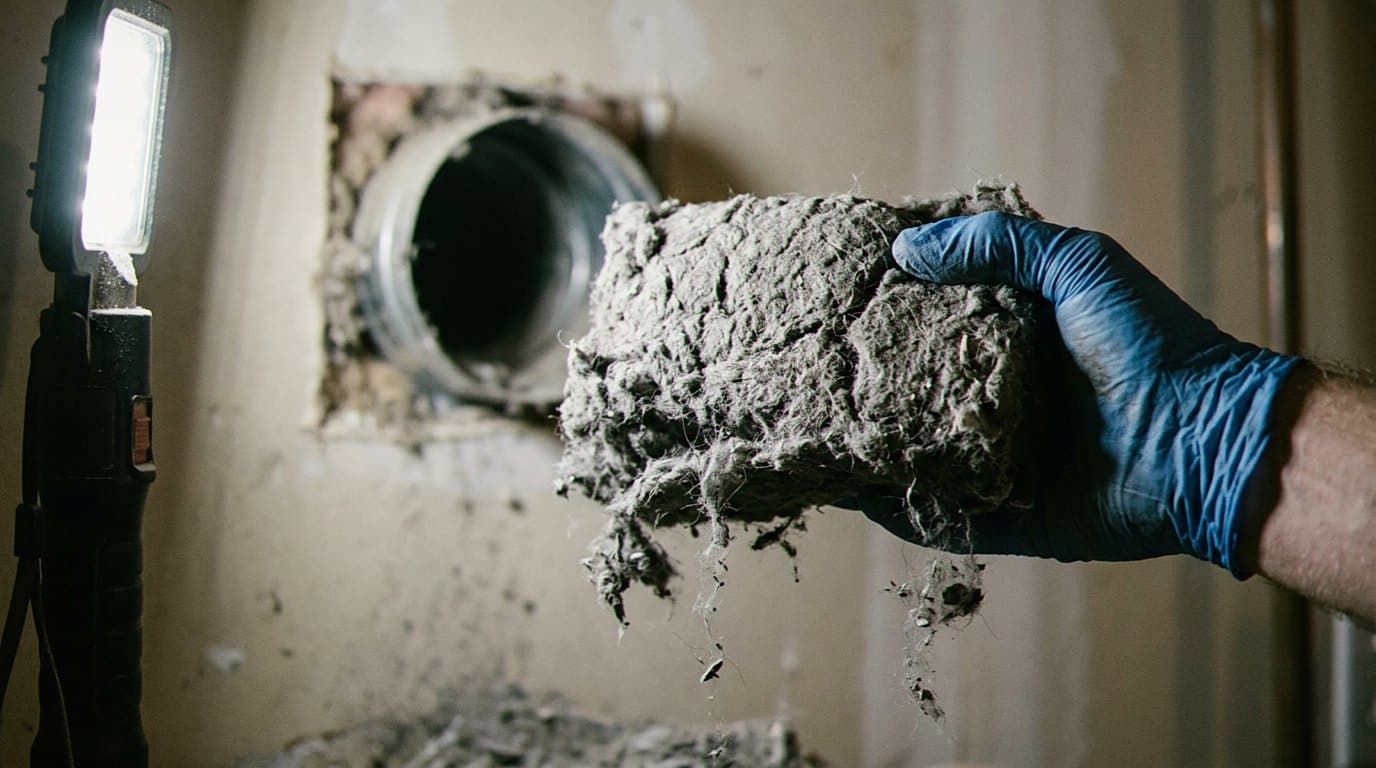
- You see the pile of lint we pull, and you feel the air at the outside hood before we pack up. The result is something you can check yourself, not a line item on a receipt.
- We name every problem we find on the way through. A crushed foil hose behind the machine, screws poking into the airstream, a wire screen over the hood, or a run longer than code allows.
We work in Elgin and the towns right around it, so we already know what most of these ducts look like before we walk in. South Elgin, Bartlett, Streamwood, Carpentersville, Gilberts, Hoffman Estates, and St. Charles all sit in our normal week. Housing stock here is a mix, and the mix matters. A frame house on the near east side may have a short duct that dumps out through the foundation rim, easy to reach and quick to clear. A townhome off Randall Road can have a run that climbs two floors and ends at a cap on the roof, which takes a ladder, a longer rod, and patience. Condo buildings sometimes share a chase, and the unit on the bottom pays for the lint of everyone above it. We plan the visit around which of those you have, and we say so on the phone rather than guessing in your driveway. Kane County weather gives this work a rhythm. Long cold stretches drive condensation inside the duct from December through March, so late winter clogs tend to be wet and heavy. Spring brings a different problem. Starlings and house sparrows look for a warm hole in a wall, and a dryer hood with a broken flap is exactly that, so we pull nests and fit guards from March into early summer. Late summer humidity slows drying on its own, which is when people first notice the vent was never the same after winter. Whatever the season, we answer our own phone and we book quickly, because a dryer running hot against a blocked duct is not something to sit on for three weeks. We also tell you when you do not need us. If the run is short, the duct is metal, and the air at the hood is strong, we will say the vent is fine and point at the lint screen or the machine instead. If we find crushed pipe, a broken flap, or a run that is simply too long for the code limit, we explain the fix in plain words and let you decide. Same crew, same truck, same names on the invoice every time. That is the whole pitch, and around here it holds up. Scheduling is simple. Tell us the address, the floor the dryer sits on, and roughly how old the house is, and we can usually tell you on the call how long the visit will take.
Call us and tell us what the dryer is doing, and we will tell you what it usually means. If it sounds like a clog, we will get out to your place, clear the run, and show you the lint that came out. Elgin homes, Elgin phone, no runaround.